No Tradebacks: The Real Reasons You'll Never Swap a Five-Star With Your Buddy
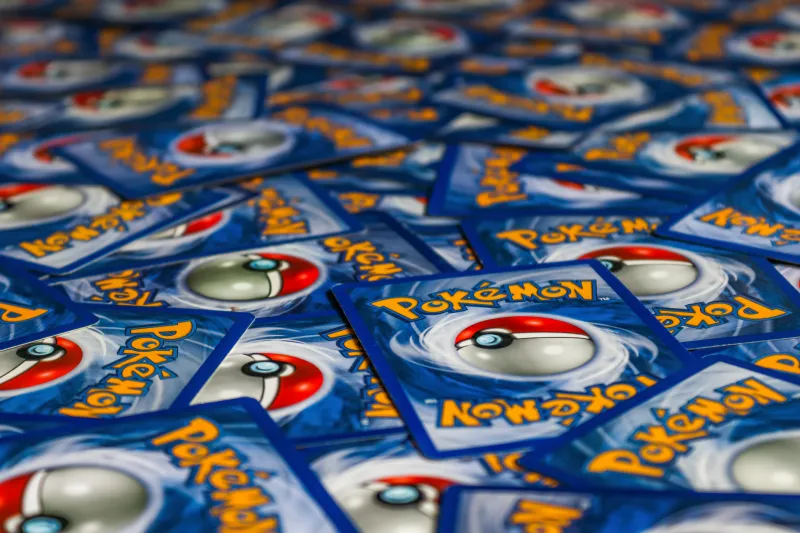
Ask any collector over 35 about their childhood and you'll probably hear about a shoebox full of baseball cards, a binder of Pokémon holos, or a lunch-table trade that still stings decades later. Trading was the hobby. Scoring a Ken Griffey Jr. rookie card meant nothing until you could flash it at your friends, and the whole Magic: The Gathering economy runs on players buying, selling, and swapping singles at their local game shop.
Now look at your gacha account. You've got a vault full of five-star units, some limited collab characters you'll never see again, and exactly zero ways to give a single one of them to another human being. If your buddy missed the Fate collab banner, tough luck. The vault doesn't open.
The question is: why? And is there any realistic scenario where that ever changes?
The Business Case Against Trading Is Brutal
Start with the obvious one: money. Physical collectibles have a secondary market, but the manufacturer already got paid at retail. Topps doesn't cry when a rookie card sells for $50,000 at auction — they already made their four bucks. That's not quite how gacha works.
Gacha revenue is driven by scarcity pressure. When a limited banner closes, the FOMO clock resets, and players who missed out are primed to spend hard when (if) the rerun arrives. Trading would punch a hole in that entire pressure system. Why pull on a 0.8% banner when you can buy the character from another player for $20? Publishers know exactly what happens to revenue projections when secondary markets enter the picture, because mobile gaming's closest cousins already showed them.
Look at what happened when games did allow item trading. Early MMOs and mobile titles with open trading economies spawned gold-farming operations, real-money trading black markets, and rampant scams. Publishers responded with account binding, soulbound items, and trade restrictions. The industry learned the lesson decades ago: open economies invite exploitation, and exploitation invites chargebacks, fraud reports, and app store headaches.
The Technical Side Is Messier Than You Think
Even if a publisher wanted trading, the architecture fights back. Gacha accounts aren't designed as collections of transferable objects — they're designed as append-only ledgers of entitlements tied to a single login. Characters come bundled with dupes, constellation/limit-break systems, level investment, equipment, and story unlocks. What exactly gets traded? The base unit? The maxed-out version? Does the buyer inherit the original owner's pull history?
Compare that to a Magic card, which is a self-contained object with no state. A Charizard is a Charizard whether it's in a binder or a deck box. A gacha unit is a node in a tangled web of account data. Every trading system ever bolted onto a live-service game has spawned duping exploits, and duping exploits in a game with real-money currency is an existential threat.
There's also the fraud angle. US app store policies, consumer protection scrutiny, and anti-money-laundering rules all get exponentially more complicated when digital goods start changing hands for cash. Nobody in a Tokyo boardroom wants to explain to Apple why their game is being used as a laundering vehicle.
What a Gacha Trading Market Would Actually Look Like
If you squint, you can see the shape of a hypothetical system. It would almost certainly be publisher-operated — think an in-game auction house with a transaction fee, not eBay. Trading would be restricted to duplicates. Limited units would be excluded entirely. There'd probably be a waiting period, a level cap, and a hard ceiling on transfers per month. In other words, a system so hobbled it would barely qualify as trading.
That's not a coincidence. It's the only version publishers would ever ship, because every other version costs them money or control. The closest thing the industry offers today is account selling — a gray market that violates every terms of service on the planet and leaves buyers with zero recourse when the original owner recovers the account. We've covered the account resale market before, and the short version is: it's the wild west, and the sheriff works for the publisher.
Could Regulators Force the Vault Open?
Here's where it gets interesting. The push for gacha regulation in the US has mostly focused on odds disclosure and loot box labeling — and even those efforts have stalled in Congress while state-level bills die in committee. Forcing interoperability or transferability of digital goods is a much heavier lift. The closest analogue is the debate over account ownership when games shut down, and even there, players have gotten sympathy, not legislation.
Player demand won't do it either, honestly. The uncomfortable truth is that most gacha players don't want trading — they want their account to be strong. Trading appeals to a collector mindset that gacha deliberately cultivates but never actually satisfies. Publishers have spent a decade training players to find satisfaction in accumulation, not exchange. The shoebox-under-the-bed social economy of physical collecting never made the jump because the games were never designed to be social objects in that way.
The Collector's Lament
There's something genuinely a little sad about it. Gacha games are, mechanically, the most ambitious collectible systems ever built — thousands of units, rarity tiers, limited runs, anniversary exclusives. They scratch the same itch that made kids hoard baseball cards in 1988. But they're collections you can't share, can't trade, and can't pass down. When the servers go dark, the whole vault evaporates.
So the next time you pull a dupe of a unit your friend has been hunting for six months, pour one out for the garage sale that will never happen. The trading dream isn't dead because players stopped wanting it. It's dead because the people who own the vault have zero reason to hand anyone a key.