Hidden Numbers: How Gacha Publishers Bury the Real Odds and What Player Data Actually Reveals

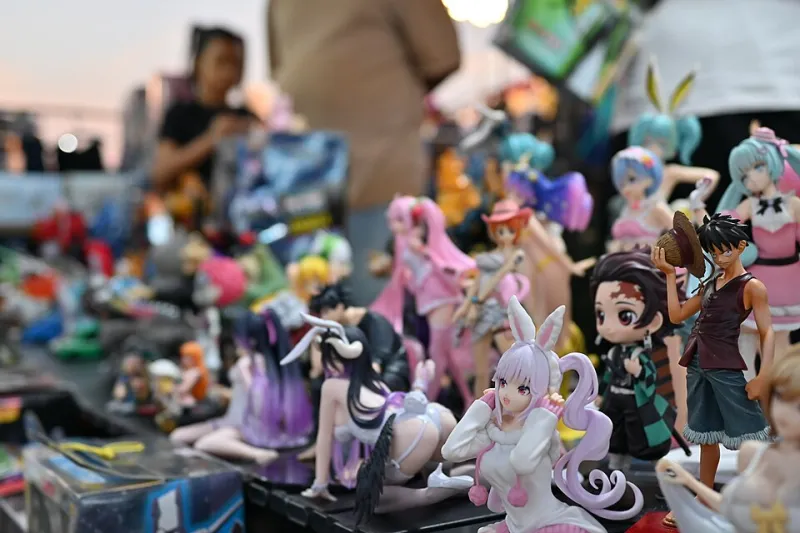
Photo: IQRemix from Canada, CC BY 2.0, via Wikimedia Commons
There's a small line of text on almost every gacha game's summon screen. It usually reads something like "5-star unit: 0.6% per pull" or "Legendary character: 1% base rate." It's technically accurate. It's also, depending on who you ask, one of the most misleading pieces of information in modern gaming.
That number tells you the base rate. It doesn't tell you about soft pity, hard pity thresholds, rate-up splits, banner-specific modifiers, or any of the other mechanical levers developers quietly pull behind the curtain. And that gap — between what's disclosed and what's actually happening — has become one of the most contentious fault lines in gacha gaming.
What "Soft Pity" Actually Means (And Why No One Will Define It)
Hard pity is the one most players understand. Roll X times, guaranteed unit. Simple. It's the number publishers usually do advertise, because it gives players a clear ceiling and makes the game feel fair.
Soft pity is different. It's a probability ramp — a range of pulls where your odds gradually increase before you hit the hard cap. In theory, it means most players get their unit well before the hard pity wall. In practice, it means the official "0.6%" rate you see on screen is almost never the rate you're actually pulling at once you've invested enough rolls into a banner.
The problem? Publishers almost universally refuse to publish the exact thresholds where soft pity begins, how steeply the curve rises, or what the actual average pull count works out to across their player base. You're told the floor. You're never told the shape of the room.
When Japan Gacha Lab reached out to several mid-tier mobile publishers for comment on their probability disclosure practices, two didn't respond, one pointed us to their in-game help screen, and one said their rates were "fully disclosed in compliance with applicable regulations." None of them answered the question.
The Reverse-Engineering Underground
Because official data is so sparse, players built their own infrastructure to find it.
Communities on Reddit, Discord, and dedicated wikis have been running pull-tracking projects for years. Players voluntarily log their summon counts — when they pulled, how many rolls deep they were, whether they hit soft pity — and aggregate that data into sample pools large enough to draw statistical conclusions. For some of the bigger titles, these community datasets now number in the tens of thousands of tracked pull sessions.
What they've found consistently is that soft pity mechanics, while real and genuinely player-friendly in some games, are often structured in ways that maximize pull consumption before the rate increase kicks in. One widely-cited community analysis of a major fantasy RPG gacha found that the soft pity curve didn't produce a meaningful probability increase until around 65–70 pulls on a 90-pull hard pity system. That means the first two-thirds of your pulls toward the ceiling are happening at or near base rate.
For a player who doesn't know where soft pity starts, that's an enormous blind spot.
"The data exists," one veteran data miner who runs a gacha statistics Discord told us. "Publishers have all of this. They know exactly where their players are pulling, what their average spend per unit is, where the drop-off happens. They just don't share it, because the moment you can calculate your true expected cost, you start making different decisions."
Regulatory Heat Is Building
This isn't just a community grievance anymore. The FTC has been paying closer attention to loot box and gacha mechanics since the late 2010s, and while comprehensive federal regulation hasn't materialized, the pressure is real and growing.
Several states have introduced legislation that would require clearer probability disclosures in games targeted at younger audiences. Belgium and the Netherlands already classify certain gacha mechanics as gambling under existing law. South Korea mandates that publishers disclose cumulative probability tables — meaning players can see not just the per-pull rate, but the probability of pulling a unit across multiple roll counts.
The US hasn't gone that far yet, but the FTC's 2022 report on loot boxes specifically flagged the lack of standardized disclosure as a consumer protection concern. Industry groups have pushed back, arguing that existing disclosures are sufficient and that gacha mechanics don't meet the legal definition of gambling. That debate is ongoing.
For American players, the practical effect of this regulatory gap is that you're operating with less information than players in some other markets. A Korean player on the same global server as you might have access to probability tables their regional version is required to publish. You might not.
Which Games Actually Do It Right
It's not all bad news. A handful of publishers have moved toward more transparent probability structures, either voluntarily or in response to player pressure.
Some titles now publish explicit soft pity start points in their in-game documentation. Others have adopted "guaranteed featured unit" systems that eliminate the rate-up split ambiguity entirely — you know that when you hit pity, you're getting the specific character on the banner, not a random 5-star from the general pool. A few have gone further and published full probability tables showing your cumulative odds at every pull interval.
These games tend to have something in common: strong, vocal player communities that pushed back hard enough to make opacity a reputational liability. The lesson for publishers seems less about ethical obligation and more about community relations math.
What You Can Actually Do Right Now
While the regulatory and industry landscape catches up, there are practical steps players can take to pull smarter.
First, find your game's community wiki or dedicated subreddit and look for a pull-tracking project. If the community has been logging data, someone has probably already done the soft pity math. That information is often more accurate than anything the publisher has officially published.
Second, treat the disclosed base rate as a floor, not an average. Your actual expected pull count is almost certainly lower than a pure probability calculation would suggest — but only if you're deep enough into a banner to be in soft pity range.
Third, pay attention to rate-up split mechanics. A 0.6% rate on a banner with two featured units, where the rate-up is split 50/50 between them, is functionally a 0.3% rate on the specific character you want. That's a meaningful difference that doesn't always get communicated clearly.
The numbers are out there. Publishers just aren't the ones giving them to you.