Praying to the RNG Gods: Inside Japan's Weirdly Wholesome Gacha Luck Rituals
Picture this: you just dropped 30,000 gems on a limited banner and walked away with nothing but dupes and a load of slappable salt. In the US, that usually means a doom post on Reddit or a rant thread on Discord. In Japan? There's a decent chance it ends with somebody posting a photo from an actual Shinto shrine, wishing luck to everyone else still rolling.
Welcome to the strange, surprisingly wholesome world of Japanese gacha luck culture — where the random number generator isn't just a math problem, it's something closer to a folk religion.
The Pre-Pull Screenshot Is a Sacred Text
Spend any time on Japanese X (formerly Twitter) around a big banner drop and you'll notice a ritual: players posting screenshots of their gem count, their story progress, or their game's 'lucky' loading screen right before pulling. Some even show their in-game birthday or login streak, as if the RNG is keeping receipts on their devotion.
This isn't superstition for its own sake — well, not entirely. It's a communal deep breath. By posting a 'pre-pull' shot, players are publicly committing to the roll and inviting their timeline to witness the outcome. It transforms a private gamble into a shared event. When the pull hits, the replies flood with congratulations. When it whiffs, the same thread becomes a support group.
Compare that to the typical US experience: you pull alone, you screenshot alone, and you post the result alone. The emotional stakes land entirely on your shoulders. Japan's version spreads the weight across the whole community.
Shrine Pilgrimages, But Make It Gacha
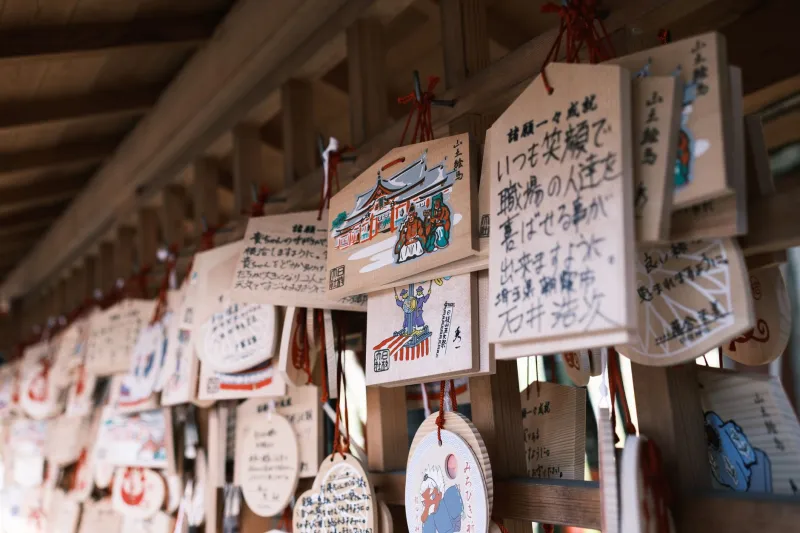
Here's where it gets genuinely cultural. Real shrines across Japan have become unofficial pilgrimage sites for gacha players. Not because the shrines have anything to do with mobile games, but because luck-wishing is already baked into Shinto tradition. Players will visit a famous shrine, snap a photo with an omamori (a protective charm), and post it with their pull results.
Some go further. Fan artists regularly draw their favorite characters in shrine settings — miko outfits, ema wish plaques, the works — and tag them as a kind of offering before a big banner. It's fan art as prayer. And the character's official artist posting a 'good luck on your pulls' illustration before a rerun? That's basically a national event.
The logic is old. Japan has a long tradition of treating fortune as something you can cultivate and share, not just something that happens to you. Gacha games, for all their cold algorithms, slot neatly into that worldview. The 0.6% rate isn't a rigged casino — it's fate, and fate responds to sincerity.
Salt as a Social Glue
The word 'ensho' (salt) gets thrown around constantly in Japanese gacha spaces. Someone posts a catastrophic ten-pull, and the replies aren't mockery — they're a wall of sympathetic salt emojis and 'may your next 10-pull be blessed.'
It works in reverse too. A lucky pull gets congratulations, yes, but also playful requests to 'share your luck.' Players will literally reply to a lucky pull with their own pre-pull screenshots, hoping the good fortune rubs off. Luck becomes a currency that circulates through the community rather than a zero-sum trophy.
US gacha communities have bits of this — 'luck bread' memes, blessing threads — but it's rarely as systematic. American spaces tend to skew toward either flexing or grieving, with less of the in-between ritual that softens both extremes.
Why Japanese Servers Seem Madder at the Meta, Not the Math
An interesting pattern: browse Japanese gacha forums and you'll find plenty of anger — but it's usually aimed at balance changes, power creep, or publisher decisions. The RNG itself gets treated with a kind of resigned affection. Bad luck is weather, not betrayal.
Part of this is structural. Japan's consumer protection rules around 'kompu gacha' (complete gacha) date back over a decade, and the industry has normalized rate disclosure far earlier than Western markets. When everyone knows the odds going in, the number loses some of its villain status.
Part of it is also the community layer. When your suffering is immediately met with ritualized sympathy, there's less need to spiral. The shrine post, the salt thread, the luck-sharing reply — these are all pressure valves. US players, by contrast, often process a bad streak in isolation until it curdles into resentment toward the game itself.
What US Players Can Actually Steal
You don't need to book a flight to Fushimi Inari to borrow the good parts of this culture. A few takeaways:
- Make pulling a shared event. Post your pre-pull state in your Discord or group chat. It sounds silly, but it converts a solo gamble into a group moment.
- Normalize the salt. A bad pull posted with humor gets support; a bad pull posted with rage gets an argument. The Japanese salt thread format works because it's self-aware.
- Build your own rituals. Whether it's a lucky playlist, a specific pull time, or a screenshot tradition, ritual gives the randomness a shape — and shape makes it easier to walk away when the budget says stop.
- Remember the odds are public. Once you internalize that 0.6% means roughly 99.4% disappointment per pull, the shrine visit starts to feel less absurd and more like emotional insurance.
The Bottom Line
Gacha games are built to make you feel alone with the odds — that's what keeps the wallet open. Japan's communities, whether through shrines, screenshots, or salt, built an immune response to that isolation decades ago. The RNG doesn't care about your rituals, but your brain absolutely does. Borrow a little of that communal coping, and the next whiffed 30k gem session might sting a whole lot less.