Lost in Translation, Found in the Comments: What English Localization Does to Your Favorite Gacha Characters
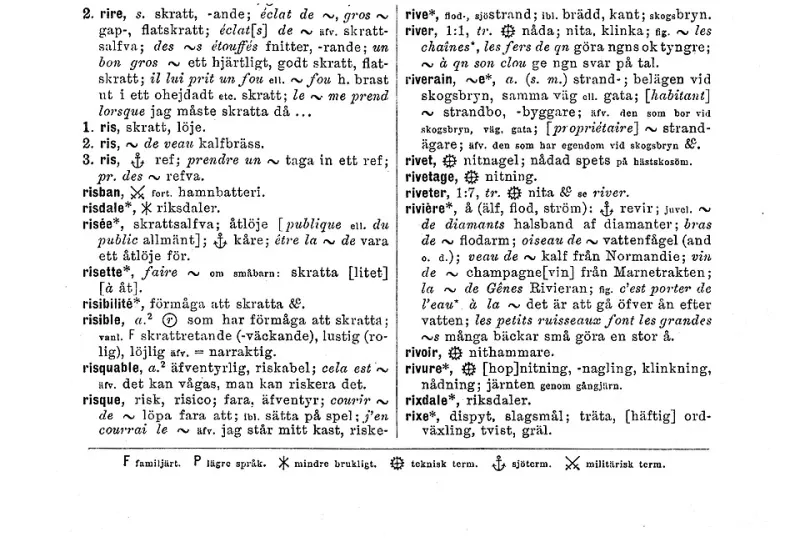
Photo: Ferdinand Schulthess, Public domain, via Wikimedia Commons
Let's get the thesis on the table: the character you're emotionally attached to is, in many cases, a co-production — and you only have credits for half of it.
English localization in gacha games is genuinely excellent in a lot of ways. These are massive scripts, patched live, under brutal deadlines. But excellence at polish is different from accuracy, and somewhere between the Japanese source text and the English voiceover, characters get subtly rewritten. Not maliciously. Politely. Which is the problem.
The Personality Drift Is Measurable
Spend any time in bilingual fan communities and you'll hear the same complaints on repeat. The stoic character who speaks in clipped, formal Japanese gets a wisecracking English script. The teasing character whose dialogue in Japanese is laced with ambiguity gets flattened into straightforward flirtation — or sanded down into pure friendship, depending on the market read.
A classic pattern: Japanese uses sentence-final particles and register shifts to signal that a character is being performatively rude or performatively sweet. English has no clean equivalent, so localizers choose. That choice is a character edit. Fans who switch to the Japanese voice track after a year of English play frequently report the unsettling experience of feeling like they're meeting a slightly different person.
Romance Is Where It Gets Spicy
Nothing gets community translation threads hotter than shipping. And to be fair to localizers, they're navigating real regulatory and platform pressure — certain app store policies and Western marketing sensibilities make explicit romance riskier than it is in the Japanese source.
The result is a familiar seesaw. Lines that read as openly affectionate in Japanese come out in English as "I value our partnership." Conversely, some localizers lean into ship-teasing because it trends on social media. Either direction, the English-speaking fandom is forming parasocial bonds with a character whose romantic temperature has been adjusted — sometimes up, sometimes down — by someone in a localization booth.
When bilingual players point this out, the standard defense is "localization isn't translation." True! But that defense cuts both ways: if you're rewriting the character, the community deserves to know when and why.
Why Translation Notes Should Be Standard
Here's my hill: gacha games should ship translation notes the way manga and light novels do. A one-line footnote — "the Japanese uses an old-fashioned speech style we rendered as formal English" or "this nickname is a pun" — costs almost nothing and buys enormous goodwill.
We already accept this in other media. Visual novel localizations do it. Anime simulcast subtitles do it. But gacha games, which ask for more sustained emotional investment than either, mostly don't. Players who spend hundreds of dollars on a character are entitled to know which parts of that character survived the crossing.
What You Can Actually Do
Practical steps, because whining is not a strategy:
- Follow bilingual fan translators on social media for the games you play. The good ones do side-by-side breakdowns within hours of a patch.
- Flip voice languages on key story moments. Even if your Japanese is shaky, register and tone carry over. If the delivery feels different from what you expected, it probably is.
- Check community wikis for translation-controversy pages — most long-running gacha games have them, and they're usually well-sourced.
None of this means the English script is bad. Often it's better writing by conventional standards — punchier, cleaner, funnier. But better writing and the same character aren't the same thing.
You fell for someone. It's worth knowing who actually wrote them.