Yesterday's Meta: The Calculated Cycle That Turns Your Favorite Gacha Units Into Dead Weight
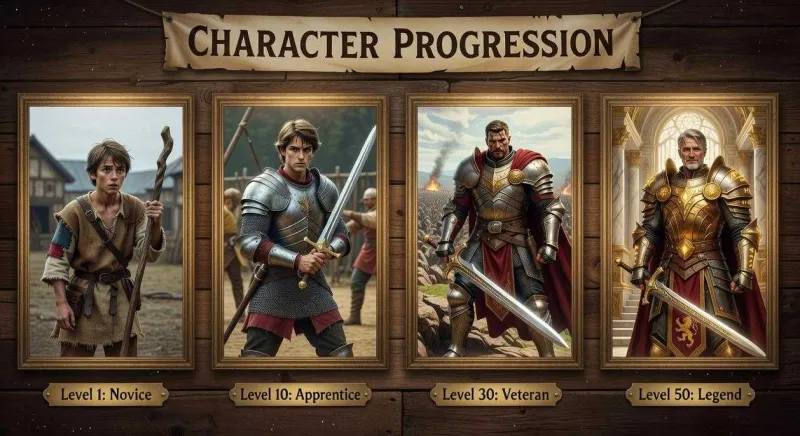
Photo: mobile RPG character roster upgrade progression obsolete, via genrodot.com
Ask any gacha veteran about the unit that broke their heart and you'll get a story that sounds almost identical regardless of the game. They loved this character. They pulled hard for them. They invested heavily — leveling, gear, skill upgrades, the works. And then, somewhere around six months to a year later, that character quietly became irrelevant. Not nerfed, not removed. Just... outpaced. Rendered obsolete by a steady stream of newer units with better base stats, shinier mechanics, and kit designs that the older character simply couldn't compete with.
This is power creep. And in gacha gaming, it isn't accidental.
How the Cycle Actually Works
Power creep in gacha games follows a recognizable pattern once you've seen it enough times. It rarely arrives in a dramatic single moment. Instead, it's cumulative — a slow, deliberate inflation of numbers and mechanics that makes the gap between old and new units widen over months rather than overnight.
The first phase is stat inflation. New units arrive with base attack, HP, or defense values that are 10–15% higher than comparable characters from six months prior. Individually, each jump seems minor. Over two years of releases, that compound inflation can result in new units that functionally operate in a completely different numerical tier than launch-era characters.
The second phase is mechanical displacement. This is where it gets more sophisticated. Developers introduce new damage types, elemental affinities, buff categories, or debuff mechanics that older characters simply don't interact with. A unit built around a damage system from 2022 might be completely blind to a shield mechanic introduced in 2024, while newer characters were designed with that mechanic in mind from the ground up. The older unit isn't weaker in a vacuum — it's just been designed around.
The third phase, and the most frustrating for longtime players, is content tuning. Late-game content gets balanced around the assumption that players have access to newer units. Enemy HP thresholds, DPS checks, and mechanic requirements get calibrated to the current meta, which means older characters — even well-built ones — start failing checks they would have cleared comfortably a year ago.
Case Studies: When Power Creep Hit Hard
Look at almost any long-running gacha title and you'll find a graveyard of once-dominant units.
In one popular fantasy action RPG, a character widely considered the gold standard for damage output at launch had, within 18 months, fallen out of even mid-tier team composition discussions. The character's kit wasn't changed. New elemental reaction mechanics were added to the game that the character's element simply didn't synergize with, and new damage ceiling benchmarks were set by subsequent releases that made the original's numbers look pedestrian by comparison.
In a strategy-focused gacha title with a dedicated US player base, a support unit that players had spent heavily to build — including expensive limit-break resources — was effectively replaced by a new character released on a limited banner who did everything the original did, plus two additional mechanics, with better base stats. Forum threads at the time were bleak reading. Players who had spent real money on a character that was now eclipsed by a more recent limited unit weren't just frustrated — they felt structurally deceived.
"The thing that gets me isn't that new characters are better," one player with seven years of gacha experience told us. "It's that the old ones don't just become less optimal. They become actively unusable in the content I want to play. That's not organic game evolution. That's a pipeline."
The Design Incentive Problem
Here's the uncomfortable truth that sits at the center of all of this: gacha games are live service products with ongoing revenue requirements. A game that perfectly balanced its roster — where every unit remained viable indefinitely — would have dramatically reduced incentive for players to pull on new banners.
Power creep is, in a very direct sense, a monetization mechanism. When your current roster can clear all relevant content comfortably, there's no pressure to pull. When newer units open up content that your existing characters can't handle, or trivialize content that your old units struggle with, the pull pressure reasserts itself.
Developers are obviously aware of this. Some are more aggressive about it than others. The most player-hostile implementations are the ones that compress the power creep cycle — releasing dominant units every few weeks rather than every few months, and tuning new content exclusively around those units almost immediately after release. The most player-friendly implementations slow the cycle down, maintain meaningful niches for older characters, and design new units to complement rather than wholesale replace existing rosters.
Games That Manage It Better
Not every gacha title treats its older units as disposable. A few have built genuine reputations for character longevity, and it's worth understanding what they do differently.
Some titles maintain relevance for older characters through niche preservation — ensuring that even if a character isn't top-tier DPS, they have a specific mechanic, element, or buff type that keeps them useful in particular content. Others use regular balance patches to bring older units up to current standards, treating roster maintenance as an ongoing design obligation rather than an afterthought. A handful have introduced legacy systems where older characters receive new skill variants or upgrade paths that bring their kits in line with current meta mechanics without requiring players to pull new units.
These approaches aren't universal, but they exist. And games that adopt them tend to have meaningfully higher player retention and more positive community sentiment around new releases — because players trust that what they invest in today won't be worthless by next year.
Pulling Smarter in a Power Creep World
If you're playing a game where power creep is a known issue, the strategic calculus around pulling changes significantly.
Focus on units with flexible kit designs rather than ones that are dominant in a single narrow context. A character whose value comes from a unique mechanic or a broadly applicable buff type has more longevity than a pure damage dealer whose only advantage is raw numbers — because raw numbers are exactly what gets inflated away.
Pay attention to how the game handles its oldest characters. If units from two years ago are still showing up in community team-building discussions, that's a signal. If the conversation around older units is exclusively nostalgic rather than practical, that's a different signal entirely.
And if you find yourself pulling primarily because you feel like you have to rather than because you want to — because your roster can't clear current content without the new hotness — take a beat. That feeling is often the power creep cycle doing exactly what it was designed to do.