Game Over for the Arcade, Extra Life for the Economy: How Japan's Prize Machines Wrote the Gacha Playbook
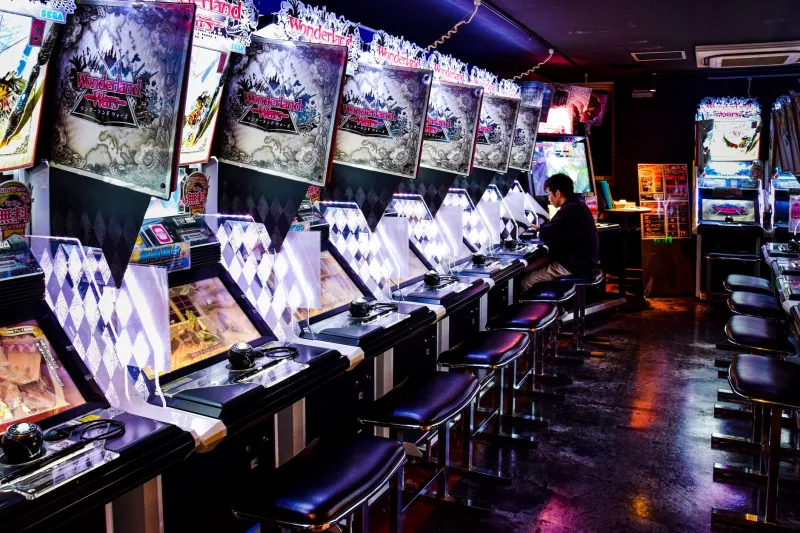
Walk through Shinjuku or Osaka's Nipponbashi today and you'll spot them: shuttered arcades, darkened windows, a handwritten sign apologizing for the inconvenience. Japan's game centers peaked at over 22,000 locations in the mid-80s. That number has collapsed to a fraction of what it once was, and the pandemic only sped up the decline.
Here's the thing though—the arcade didn't really die. It reincarnated. And if you've ever dropped money on a ten-pull, you've been playing inside its ghost all along.
The Crane Game Was the First Gacha Pull
Strip away the plush toys and the LED signage, and a crane game is a monetization machine with a remarkably familiar skeleton:
- A visible prize sitting right there, taunting you
- A fixed cost per attempt, small enough to feel trivial
- Uncertain odds dressed up as skill
- Sunk cost psychology—you've already fed the machine three times, what's one more?
Sound familiar? Every gacha banner works the same emotional levers. The difference is that the crane game got there first, in the 1960s, and Japanese operators spent decades refining exactly how much frustration a player would tolerate before walking away.
That calibration—the sweet spot between "this feels winnable" and "just one more try"—is the single most valuable piece of design knowledge the arcade industry passed down. Mobile gacha didn't invent it. It inherited it.
Medal Games: The Original Currency Laundering
Then there's the medal game corner—those slot-style and pusher machines where you exchange real yen for brass tokens that only exist inside the venue. Once your money becomes medals, something interesting happens psychologically: the pain of spending dulls. You're not betting dollars anymore; you're betting shiny discs.
Every premium currency in every gacha game you play—gems, crystals, orbs, whatever your poison—is a medal game token with a better marketing team. The conversion step exists for one reason: to insert a mental buffer between your bank account and the transaction. Japanese arcade operators proved decades ago that this buffer measurably increases spend. Publishers just ported the finding.
The other lesson from medal corners: losses feel less real when the currency is abstract. Researchers studying gambling behavior have long noted that chips and tokens encourage higher risk-taking than cash. Gacha games took that insight and made it global.
Why the Arcades Themselves Couldn't Survive
If the economics were so brilliant, why are the venues closing? A few brutal reasons:
- Real estate. Prime urban floor space in Tokyo and Osaka got too expensive for machines that earn a few hundred yen per hour.
- Demographics. The kids who grew up in 80s game centers aged out, and their children went straight to smartphones.
- The industry cannibalized itself. The prize-and-chance model was simply more profitable when you didn't have to pay rent on a physical building.
That last point is the key one. The arcade's problem was never its monetization psychology—it was the overhead. Gacha games kept the psychology and deleted the rent. It's the same business with a 90% smaller cost structure, which is why the mobile version could go global while the physical one shrank back to tourist districts and UFO catcher chains like Taito Station and GiGO that survive on novelty and Instagram moments.
Where the DNA Goes Next
So if modern gacha is arcade economics without the arcade, what's the next mutation? Watch the survivors.
The arcades that are still standing aren't really arcades anymore—they're experience venues. Photo booths, café corners, limited-edition prize lineups tied to anime collabs, membership apps that track your visits. The machines stopped being the product; the occasion became the product.
Translation for your phone: expect gacha games to keep pushing toward event-driven, limited-window everything. Collab banners, seasonal venues, social features that make the pull a shared moment rather than a solo transaction. The physical arcade learned that people will pay for atmosphere and scarcity; mobile games are already well down that road with FOMO-driven limited units and live-service events.
There's also a nostalgia arbitrage happening. Western players raised on claw machines at Dave & Buster's and mall arcades respond to the same prize-loop instincts Japanese operators spent generations mapping. That's a big part of why gacha landed so hard in the US market—the psychology was never foreign. It was just waiting for a delivery mechanism.
Paying Respect to the ancestors
Next time you're staring at a pity counter at 2 a.m., spare a thought for the smoky game center in Ikebukuro that ran the same con with a metal claw and a One Piece prize. The lights are off now, but the machine still runs—it just fits in your pocket and never closes.
The arcade's soul didn't die. It got a better server.