The Million-Dollar Voice: What Happens Behind the Mic When a Gacha Game Gets an English Dub
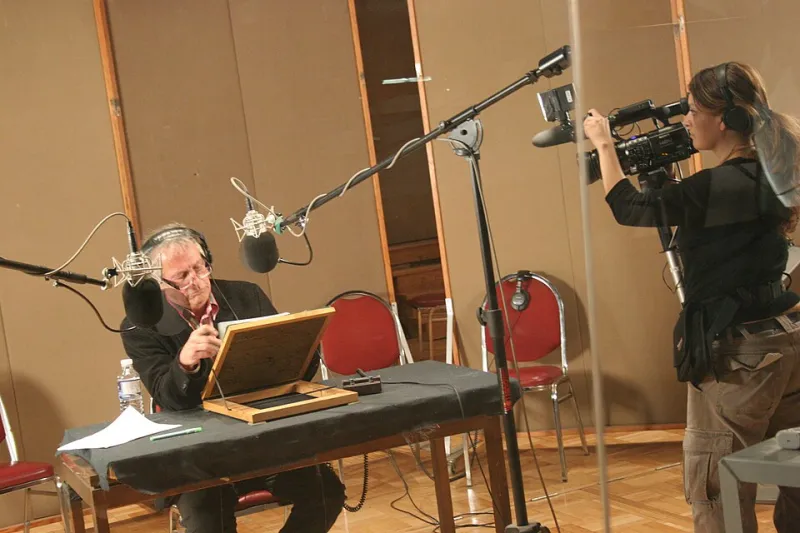
Photo: Kat Baulu, CC BY 2.0, via Wikimedia Commons
Here's a question most of us never ask while skipping through another summon animation: why does this game have a full English cast, and that one doesn't?
It feels random. It's not. Whether your favorite gacha unit greets you in English or Japanese is the result of one of the most expensive, risk-averse decisions a publisher makes — and the ripple effects reach all the way into your pull budget.
The Sticker Price Nobody Talks About
Let's start with the uncomfortable math. A single anime episode runs roughly 20 minutes. A gacha game? Thousands of voice lines, hundreds of characters, and a release cadence that never stops. A new limited banner drops every few weeks, and every new unit needs fresh voice work in every supported language.
Industry estimates for a full anime-style dub usually land somewhere between $250,000 and $500,000 per season of a show. Now imagine a live-service game that generates new content forever. Over the lifetime of a title, a complete English dub can easily cross into seven-figure territory once you factor in union rates (SAG-AFTRA has its own fee structures), studio time, direction, re-records for balance patches, and ongoing per-character contracts.
That's why the default for many gacha imports is Japanese audio with English subtitles. It's not laziness — it's a straight cost-benefit call. The publisher is betting that a large chunk of the Western audience either doesn't mind or actively prefers seiyuu performances, so the dub investment won't pay for itself.
Why Some Games Bite the Bullet Anyway
So who's paying up? The publishers who believe voice acting is a conversion tool, not a cosmetic feature.
Titles like Genshin Impact, Honkai: Star Rail, and Fire Emblem Heroes ship with full English casts because their publishers treat the English-speaking market as a primary revenue pillar, not an afterthought. HoYoverse in particular goes further than most, recording in four languages simultaneously — a staggering logistical lift when you realize a single patch can add hours of dialogue.
The reasoning is pretty simple when you think about how gacha actually works. These games sell attachment. You pull for a character because you've spent 40 hours listening to them banter in your party, and a performance in your native language builds that bond faster for most US players. A well-cast English voice turns a stats screen into a character you want. And a character you want is a character you roll for.
The Dub Delay Drama
Ask anyone who played Genshin in 2020 — the English voice track didn't arrive at launch for a lot of content, and some early characters went months without English lines. The community meltdown was real, and it taught publishers a lesson: for a vocal slice of the player base, missing dubs aren't a minor inconvenience. They're a reason to hold off pulling.
That's the hidden mechanic here. If a limited banner character ships without English audio, a segment of spenders will simply skip the banner and save gems for a later rerun — one that hopefully includes the dub. Multiply that hesitation across a full player base and a delayed voice track can genuinely dent a banner's revenue. Publishers know this, which is why "English dub coming in a future update" has become both a standard apology and a quietly expensive problem to fix.
When the Seiyuu IS the Product
Of course, the flip side deserves equal attention: for a meaningful chunk of US gacha players, the Japanese cast isn't a compromise — it's the selling point. The seiyuu economy is a real thing (we've covered it before on this site). Fans pull specifically for a beloved voice actor, and an English dub can't replicate that. Some games, like Fate/Grand Order, leaned so hard into the original cast that an English dub was never seriously on the table for years.
This creates the fork in the road every publisher faces: dub for the broader casual market, or stay Japanese-only to protect the star power of the original performances. There's no universally right answer — only budget sheets and audience data.
Standout English Casts That Earned Their Paychecks
Credit where it's due — when Western studios go all-in, the results can rival the originals. Zach Aguilar and Erica Mendez became the voices a whole generation associates with anime-adjacent gaming. Honkai: Star Rail's English cast, featuring veterans like Cia Court and Alejandro Saab, gets routinely praised for comedic timing that subtitles alone couldn't deliver. And Fire Emblem Heroes proved that even a decade-old franchise could build fresh English performances fans genuinely love.
The common thread? Casting directors who treat the dub as its own production, not a checkbox.
What It Means for Your Wallet
Next time you're deciding between two banners, notice which performance is doing the persuading. If you find yourself pulling for a character because of how they sound in English, you've just experienced the dub working exactly as the publisher intended — as a multimillion-dollar investment in your attachment.
Either way, the voice in your ear was never an accident. Somebody ran the numbers, and somebody decided what your immersion was worth.